Sy.No.819/Part, Kistapur Road, Medchal, Hyderabad.

Guide to Sheet and Coil Handling
26 February 2025
Guide to Sheet and Coil Handling
The manipulation of sheet and coil materials has been a key focus of operations in manufacturing, construction, automotive and metal processing industries. These are heavy, bulky and sometimes delicate materials that are made of steel, aluminum or other metals.
Effective management will provide safety to workers, avoid material damage, and ensure work efficiency. This guide provides essential principles, techniques, and best practices of safe and effective handling of sheets and coils.
UNDERSTANDING SHEET AND COIL MATERIALS
Metal products that are usually flat-rolled are sheets and coils. Sheets are cut to a certain size whereas coils are long continuous strips that are rolled up in the form of a roll. Coils may be several tons in weight and may differ in their widths, thicknesses and material make up. Due to their size and weight, when handled improperly it can lead to severe injury, damage of equipment, or defects in the product like scratches, dents or deformation of edges.
Before handling, it is important to know the material properties including tensile strength, thickness and surface sensitivity. Stainless steel coils, e.g., may need additional attention since they have smooth faces, and thicker sheets of carbon steel can need more heavy lifting equipment.
EQUIPMENT USED IN HANDLING
Effective management requires proper equipment. Common tools include:
Overhead cranes: This one is commonly used to move heavy coils and sheets. They can be fitted with special attachments.
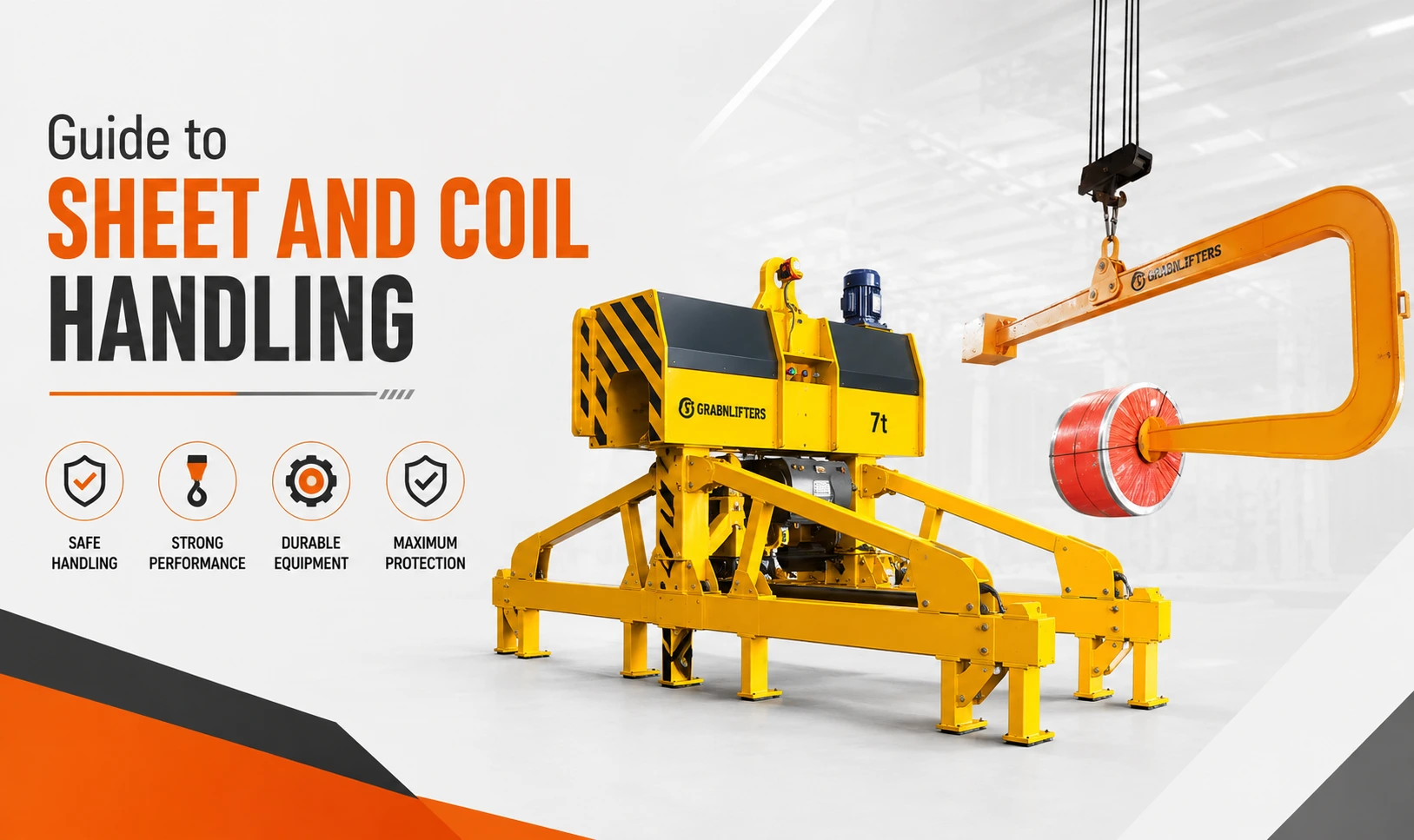
C-hooks and coil grabs: These are special purpose clamping tools that are made to grip coils by their inner diameter.
Coil Upenders: Coil Upenders are used to switch the direction of coils between horizontal and vertical (or vice versa).
Coil Cars / Transfer Cars: Coil Cars are motorized conveyors that are used in carrying out coils at the industrial plants.
All the equipment should be inspected and maintained by skilled staff on a regular basis to maintain the safety and reliability.
SAFE HANDLING PRACTICES
The most important factor with sheet and coil materials is safety. Gloves, safety shoes, helmets, and eye protection should be used by workers. The edges of the sheets can cut severely, and the coils that are not secured can be moved. Do not make any sudden movements when lifting and transporting. Smooth and controlled motions eliminate the load shifting and falling. Moreover, employees must not be under hanging loads.
PROPER STORAGE TECHNIQUES
Storage assists in maintaining the quality of materials and safety at the workplace. Coils are not to be rolled but placed on solid surfaces using cradles or supports. Depending on the design and management of the facilities, they can be placed vertically or horizontally.
Environmental circumstances matter. Steel items can become corroded due to wetness. Therefore, storage rooms must be dry and well ventilated.
PREVENTING MATERIAL DAMAGE
The quality of sheets and coils should be maintained especially in other industries in which the surface finish is paramount. Injury may be sustained because of improper lifting, dragging, or being in contact with hard surfaces.
To prevent this:
- Wear lifting equipment padding.
- Do not make direct metal contacts.
- Be careful with material and do not drop it.
- Keep working areas clean to avoid contamination with dirt or debris.
In the case of coated materials or polished materials, any slight scratch may make the product unusable thus the money is lost.
TRAINING AND OPERATIONAL GUIDELINES
All people working with sheets and coils must be properly trained. The operators must know how to use equipment, load capacity and emergency response. Maintenance of awareness and preparedness is achieved by conduction of regular safety drills and refresher courses.
The standard operating procedures (SOPs) must be well stipulated and available. These guidelines must touch on all the dimensions of dealing with it, such as taking material, storage, and dispatching. Supervisors need to make certain that unsafe practices are followed to the letter and that unsafe practices are addressed as they arise.
RISK MANAGEMENT AND EMERGENCY PREPAREDNESS
Even with the best efforts, accidents do take place. The impact is reduced by having a risk management plan in place. This involves determining the possible risks, taking preventive precautions and emergency preparedness.
Emergency procedures must also cover how to deal with dropped loads, equipment failure or how to deal with worker injuries. The first aid kits, fire extinguishers and the emergency exits should be readily available. Reporting and investigations of incidences as soon as they occur assist in prevention of future occurrence.
CONCLUSION
The process of handling sheets and coils is not simple, yet it can be handled effectively when the correct knowledge and precautions are taken. Organizations can greatly minimize risks and enhance efficiency by being aware of material properties, proper equipment selection, safe handling procedures and proper training.
Storage and handling are not only done in a way that protects the workers but also maintains the quality of valuable materials. A strict and safe attitude eventually results in smooth running and success in the long term.