Sy.No.819/Part, Kistapur Road, Medchal, Hyderabad.

Know About the 10 Different Grab Buckets and Their Applications in the Lifting Industry
29 January 2025
Know About the 10 Different Grab Buckets and Their Applications in the Lifting Industry
In the challenging lifting and material handling industry, efficiency must be the main priority. The grab bucket is one of the most important attachments to cranes, excavators and hoists, and is a multifunctional device that is used to mechanically grip, retain, and release bulk material without any human intervention. The right grab bucket can significantly improve productivity, safety and lower the costs. They are widely categorised into mechanical and hydraulic, although there is further specialisation in terms of the type of material that they are intended to handle.
Here are 10 different grab buckets and their specific applications:
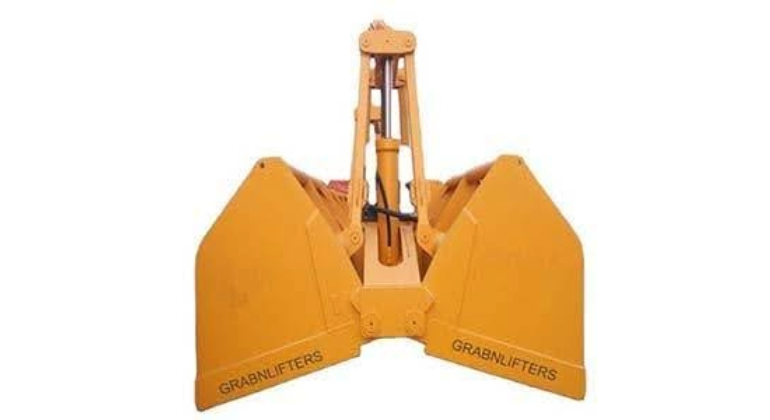
CLAMSHELL GRAB
The clamshell is the most recognisable grab bucket. Featuring two hinged shells that open and close from the centre, it operates like a clam, hence its name. It can be rope-operated (using a single or multiple hoists) or hydraulically powered.
Application: It is mostly used in loose and free flowing goods such as sand, gravel, coal and farm produce. It is best suited to general-purpose ship, truck, and stockpile unloading and general digging and reclamation in the open ground.
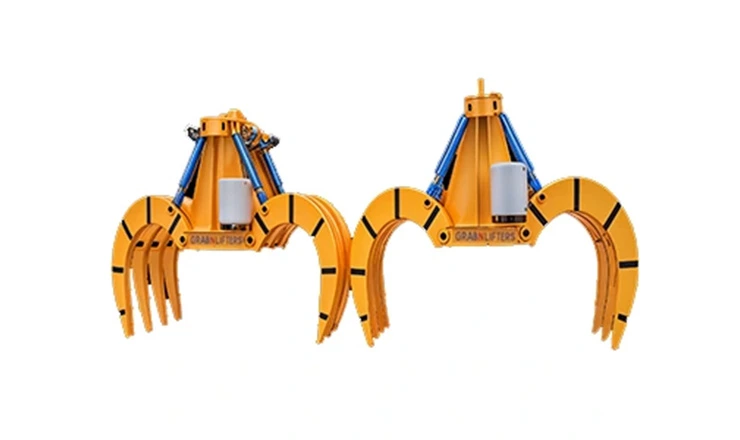
TIMBER/LOG GRAB
This grab was designed to fit the forestry and lumber industry where it has long and curved arms and has deep claws or spikes rather than flat shells. This design makes sure that the grip is secure on irregular shapes and forms which are cylindrical such as logs.
Application: As the name implies, it is only applicable in the processing of logs, timber, and wood pulp. It is usually fitted on mobile cranes, forwarders and port-side cranes to load and unload ships and organise timber yards.
SCRAP & DEMOLITION GRAB
These grabs are very robust, and have heavy reinforcement to counter the harsh environment of scrap metal and demolition sites. They are usually reinforced tined, steel plated and strong hydraulic cylinders. Multi-tine grapples with an orange peel design or clamshells of heavy-duty can be included in the designs.
Application: Handling of ferrous and non-ferrous scrap, demolished concrete, and rubble and other construction and demolition waste. They are necessary in scrap yards, recycling centres, and during the demolition projects.
ROCK GRAB
Like the scrap grab in its strength, the rock grab is designed to work with heavy and abrasive material. It can generally be identified as possessing fewer, more massive tines and possessing hard-wearing ends so as to penetrate and force open piles of rock and ore.
Application: Primarily used in quarries, mines, and at construction sites for moving blasted rock, large stones, and heavy ores. Its design focuses on durability and penetration force.
ELECTRO-HYDRAULIC GRAB
This is an advanced, high efficiency type in which the grab includes its own separate hydraulic power supply (typically a battery or grid supply). This removes the necessity of sophisticated rope reeving and gives the opportunity to control the opening, closing, and force.
Application: This is commonly used in ports and bulk terminals to process various types of materials such as fertilisers, minerals and grains. Its control is very accurate and reduces the amount of wastage of material and formation of dust, thus making it efficient and very environmentally friendly.
COAL GRAB
Specifically designed for the high-volume handling of coal, these grabs are often large-capacity clamshells. They may feature special seals and designs to minimize dust creation, which is a critical safety and environmental concern in coal-fired power plants and ports.
Application: Unloading coal from ships (at ports) and transporting it within power plant stockyards or coking plants. The large capacity of the grab helps in completing the task quicker.
SINGLE ROPE GRAB
This is a purely mechanical grab that operates using a single hoist rope. The opening and closing action are triggered by the grab landing on the material pile. A latch mechanism releases the shells upon contact, and the hoist's upward pull closes them, grabbing the material.
Application: Lighter and uniform materials (such as grain, seeds, plastic pellets, etc.) are recommended. It is simple and therefore cost effective in use in applications where the speed of operation is not significant such as silo loading or barge unloading.
MULTI-ROPE GRAB
This grab is a workhorse in heavy industry and shipping and has two sets of ropes; the first set has the task to raise/lower the shells whereas the other set focuses on the task to open/close the shells. This enables independent control thus compared to a single-rope grab is quicker and flexible.
Application: The criteria of handling bulk cargo in ports where materials such as iron ore, coal, and aggregates are to be handled. It is a world favourite because of its capacity to be fitted with conventional crane hooks and its dependability.
FORK GRAB
This grab is essentially a set of powered forks that can open and close. It is designed to handle palletised or unitised loads that a forklift would traditionally move, but in areas where a crane has better access.
Application: Handling bagged goods, bricks on pallets, or other unitised cargo in warehouses, on construction sites, or for loading ships where a forklift cannot reach.
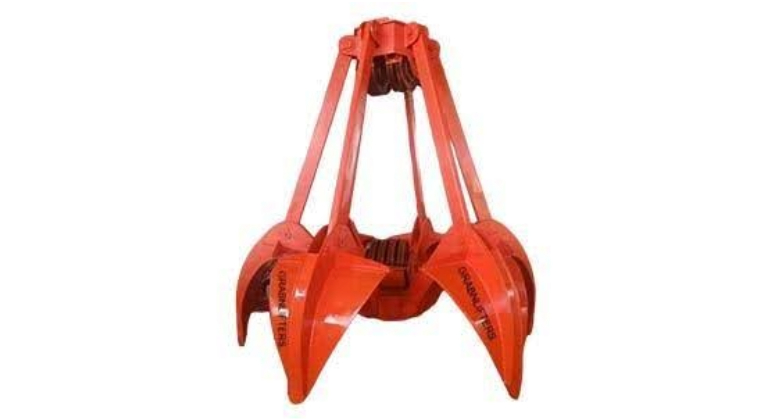
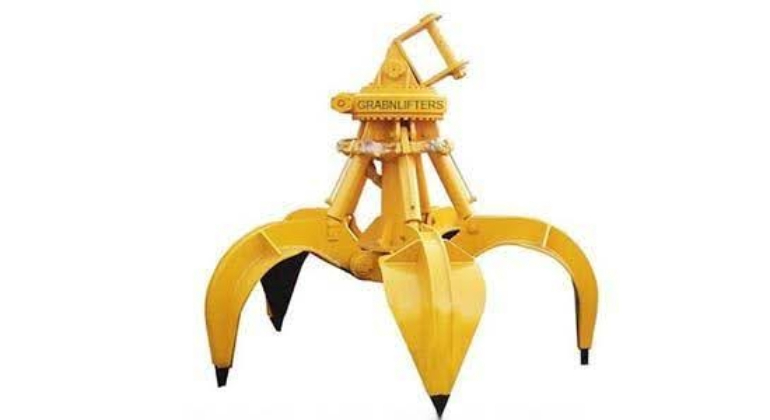
ORANGE PEEL GRAB
Characterised by multiple (typically four to six) curved tines that close to form a sphere, resembling an orange peel. This design allows it to enclose materials from all sides.
Application: Extremely versatile, it is used for handling irregularly shaped objects and bulk waste. Its common uses include clearing demolition debris, handling scrap metal, grappling rocks, and even cleaning up after natural disasters. A lighter version is also used for handling municipal solid waste.
CONCLUSION
The selection of a grab bucket is a critical decision that directly impacts operational efficiency. By matching the specific type of grab bucket—from the general-purpose clamshell to the specialised orange peel or timber grab—to the application, industries can achieve safer, faster, and more cost-effective material handling, lifting their productivity to new heights.