Sy.No.819/Part, Kistapur Road, Medchal, Hyderabad.

The Strategic Role Of Transfer Trolleys in Heavy Industry
25 April 2025
The Strategic Role Of Transfer Trolleys in Heavy Industry
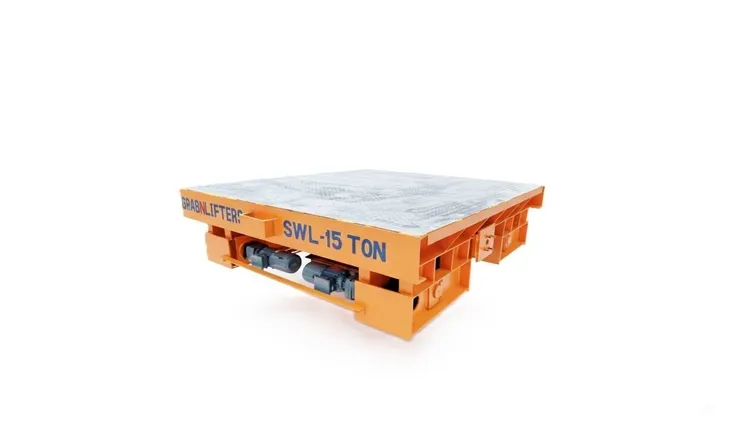
The productivity in present-day heavy industries, including steel plants and shipyards, paper mills and manufacturing centers, depends on efficient movement of materials. Although vertical handling is mostly dominated by lifting equipment such as overhead cranes, horizontal transportation within large facilities may have a different set of problems. Here the transfer trolleys, also called transfer cars, are very strategic and indispensable.
Transfer trolleys provide the solution to this gap in the logistics where heavy loads must be transferred safely and efficiently at ground level, a task performed through the trolley designed to join the production stages in an uninterrupted workflow and reduce operational delays to the lowest.
THE LOGISTICS GAP: WHY OVERHEAD CRANES AREN'T ALWAYS THE ANSWER
There is no doubt that overhead cranes are the kings of vertical lifting. But even when used to the extent of long distance horizontal transport, it can cause severe bottlenecks. In high volume plants, the cranes are frequently engaged in a critical lifting task like loading, unloading, or servicing production lines.
With them, it is possible to transport one coil, slab or pipe across more than one bay:
- Delay production cycles
- Increase waiting times
- Decrease total equipment performance.
- Cause congestion in busy areas.
Transfer trolleys offer a horizontal movement dedicated floor-level solution. By taking this off the cranes, they enable lifting equipment to concentrate on high-priority vertical tasks, which result in a net effect of better plant productivity and balance of the workflow.
MOTORIZED RAIL TRANSFER CARS
Motorized rail transfer cars are used in the industry where repetitive movement along a fixed path is concerned.
Key advantages include:
High Load Capacity: Trolleys guided on rails have very heavy loads, most commonly between 5 metric tons (MT) and over 100 MT. This is what makes them applicable in transportation of raw steel, castings and huge parts.
Power Alternatives: These trolleys can be driven by trailing cables, cable reels or busbar systems and are typically intended to be used on a continuous basis based on the design of the plant.
Precision Routing: Embedded rails imply an unpredictable and determined route. This not only enhances safety, but also allows easy adoption by the automated production line.
Due to reliability and predictability, rail transfer cars are frequently utilized in the areas where the flow of materials is uninterrupted and predictable.
BATTERY-OPERATED AND DC POWERED TROLLEYS
With the transition to automation and smart manufacturing in industries, flexibility is now a pressing demand. Transfer trolleys that run on batteries as well as DC provide a flexible option to facilities that need movement outside of tracked systems.
The main characteristics of them are:
Long Range Mobility: these trolleys have heavy duty battery systems and can move through multiple bays and follow complicated layouts and even be used outside without being connected to a power supply.
Soft-Start Technology: DC motors allow the gradual braking and smoother acceleration. This is especially necessary when working with sensitive or valuable materials like finished paper rolls, coated steel coils or machined parts that need accuracy in their machining.
Remote Control: The majority of them are operated by means of wireless remotes or hand-held pendants, which ensures that the operator can safely stay at a distance and have a clear view of the movement.
SPECIALIZED HANDLING: COILS, PIPES, AND MORE
The effectiveness of a transfer trolley is not only determined by its movement system, but also the load-handling interface. The trolley deck must be customized to provide a safe and efficient transportation of various material.
Common configurations include:
Coil Handling: Coil handling trolleys have V shaped cradles or bolsters. These ensure that the round loads do not roll or move during movement particularly during acceleration or braking.
Pipe and Billet Handling: In long, cylindrical materials, trolleys have stanchions, spacing or side supports to hold the loads steady and in the correct position.
Flat-Deck Designs: These are universal decks that are used to carry heavy machinery, pallets, structural components, and non-uniform loads.
Such versatility means that only one trolley system is required to deal with a high number of different materials, which makes it an economical choice when it comes to a multi-purpose facility.
SAFETY AND EFFICIENCY FEATURES
The contemporary transfer trolleys have sophisticated safety mechanisms that aid the smooth running of the trolley and prevent accidents even in the high traffic industrial setup.
The main safety characteristics are:
Anti-Collision Sensors: Proximity sensors and laser scanners can sense a barrier or people on the track of the trolley and prevent it by halting the movement.
Visual and Audible Cues: Flashing lights, sirens, and alarms are used when the trolley is in operation to warn workers of the trolley movement.
Emergency Stop Systems: There are emergency stop buttons that are readily available and can be shut down at any given time.
Mechanical Reliability: These trolleys are made using high-tensile steel structures and strong gear systems, which allow 24/7 operation with few maintenance needs.
Not only these characteristics help to protect the workforce but minimize expenses of the material damage and downtime.
INTEGRATION WITH MODERN INDUSTRIAL SYSTEMS
Transfer trolleys are also becoming more and more part of the digital digitalized industrial world where they are becoming part of smart systems and automation technologies.
Examples of integration are:
- Automated schedules and programmable routes.
- Interaction with warehouse management systems (WMS).
- Load monitoring and diagnostics sensors.
- Real-time tracking interconnected with the central control rooms.
OPERATIONAL BENEFITS OF TRANSFER TROLLEYS
The strategic use of transfer trolleys has a number of operational advantages:
- Reduced use of overhead cranes.
- Better circulation of materials in big plants.
- Better security, as there is controlled traffic on the ground.
- Improved production due to less delays.
- Flexibility to different types of loads.
All these advantages make transfer trolleys an important resource to any heavy industrial enterprise.
FINAL WORD
Transfer trolleys have transformed into mere carriers of materials to important logistic optimization tools in heavy industry. They will solve the drawbacks of overhead cranes in horizontal transportation and make the movement of materials through the plant smoother, faster, and safer.
Depending on whether they are rail-guided on a fixed route or battery-powered on a flexible movement, they are essential in contemporary industrial operations. As automation, safety, and customization improve, the transfer trolleys remain instrumental in improving the efficiency and sustaining the rising needs of heavy industries.